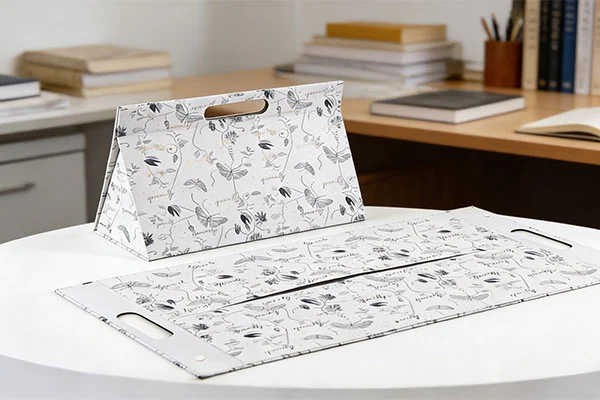

Article Summary: A well-designed DuPont Paper Bag can offer a practical alternative to conventional paper packaging when durability, lightweight construction, moisture resistance, appearance, and repeated use are important. Unlike ordinary kraft paper bags, Tyvek®-based bags combine a paper-like appearance with properties associated with synthetic nonwoven materials. This makes them useful for retail packaging, gifts, promotional campaigns, exhibitions, apparel, specialty products, and other applications where packaging must look attractive while handling everyday use. This guide explains the material characteristics, structural choices, printing considerations, customization process, and purchasing factors that businesses should evaluate before ordering. It also explains how Bonnie can help buyers develop a suitable bag solution according to product weight, dimensions, branding requirements, and intended application.
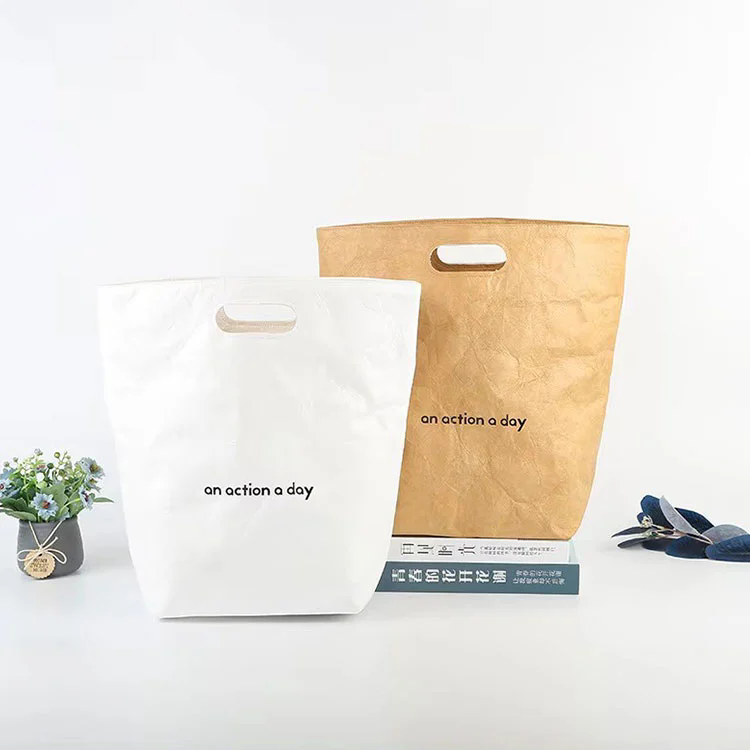
A DuPont Paper Bag is a specialty packaging bag commonly produced with Tyvek®, a high-density polyethylene material manufactured using a flash-spinning process. Although the material has a paper-like appearance and can be processed into paper-bag-style packaging, its physical behavior differs considerably from conventional paper.
The material is known for being lightweight while providing a combination of tear resistance, flexibility, and moisture resistance. This combination makes it particularly interesting for businesses that want packaging with a premium visual character but do not want to rely exclusively on traditional paper.
For buyers, the important point is that the term "DuPont Paper Bag" should not be interpreted simply as a thicker or stronger kraft paper bag. Material composition, construction, handle design, printing method, and reinforcement all influence the final performance.
Bonnie provides customized DuPont Paper Bag solutions for businesses that need branded packaging in different sizes, structures, finishes, and application scenarios. The right design should always begin with the intended use rather than simply selecting the heaviest available material.
Traditional paper bags are often selected because they are economical, printable, familiar to consumers, and suitable for short-term carrying. However, they can lose strength when exposed to moisture and may tear when repeatedly folded, squeezed, or heavily loaded.
A DuPont Paper Bag approaches these challenges differently. Its material structure gives it a distinctive balance between low weight and durability. It can retain a clean, premium appearance while offering better resistance to common handling conditions.
| Factor | DuPont Paper Bag | Conventional Paper Bag |
|---|---|---|
| Weight | Generally lightweight for its strength | Varies according to paper grade and thickness |
| Moisture Resistance | Better resistance to light moisture exposure | Paper fibers can weaken when wet |
| Tear Resistance | Designed for improved resistance to tearing | Depends heavily on paper grade and construction |
| Repeated Use | Suitable for repeated handling in many applications | Often intended for shorter-term use |
| Appearance | Paper-like, clean, modern appearance | Classic paper packaging appearance |
| Branding | Suitable for customized graphics and finishing | Widely printable with established paper processes |
This does not mean that one material is universally better than another. The correct choice depends on the product, budget, expected service life, brand positioning, and environmental conditions.
Businesses typically consider this type of bag when ordinary packaging cannot provide the desired combination of appearance and physical performance.
However, durability should never be judged from material weight alone. The bottom construction, handle attachment, seams, reinforcement, and product geometry can have a major influence on actual load performance.
Material weight is one of the first specifications buyers should discuss with a manufacturer. Choosing the thickest option may appear safer, but excessive material can increase cost and reduce the lightweight character that makes this packaging attractive.
| Typical Material Range | Potential Applications | Key Consideration |
|---|---|---|
| Around 50–70 g/m² | Samples, promotional bags, lightweight gifts | Prioritize flexibility and low weight |
| Around 70–100 g/m² | Retail packaging, apparel, gifts | Balance appearance, strength, and cost |
| 100 g/m² and above | Higher-load or premium packaging | Consider reinforcement and total bag construction |
These ranges are useful starting points rather than universal specifications. The appropriate material should be confirmed through physical sampling, especially when the finished bag will carry heavier products.
Before ordering, buyers should tell the manufacturer:
Bag structure directly affects usability. A beautiful printed bag can still disappoint customers if the opening is too narrow, the bottom is unstable, or the handles are poorly positioned.
Square-bottom structures are useful when the package needs to stand upright. They provide a more stable base and can accommodate clothing, gift boxes, accessories, and other products with relatively defined shapes.
Envelope-style structures are lighter and simpler. They can work well for documents, samples, promotional materials, and lightweight products where a standing bag is unnecessary.
Reinforced bottom structures are recommended when the bag will regularly carry heavier goods. Additional reinforcement can distribute stress and reduce concentrated loads around the base.
Product geometry should also be considered. Sharp corners or protruding components can create concentrated stress points. In such cases, an inner protective layer or suitable reinforcement may be more practical than simply increasing material weight.
The handle is one of the most frequently stressed components of a shopping bag. A suitable handle must match both the expected load and the overall visual style.
Handle placement also matters. If the handles are positioned too close to the opening or too far apart, the bag may feel uncomfortable during carrying. Sampling is therefore important before approving mass production.
Printing is not simply a decorative step. The surface characteristics of the material, ink compatibility, coverage area, drying behavior, and finishing method can all influence the final result.
For a strong visual effect, brands should avoid treating the bag exactly like a conventional coated paper substrate. The printing method should be selected according to the actual material and artwork.
Possible customization options include:
Large areas of very dark printing should be tested carefully because extensive ink coverage can influence the visual texture and flexibility of the finished bag. A physical proof allows the buyer to evaluate color, artwork clarity, folding behavior, and overall appearance before committing to a production run.
The combination of appearance, lightweight construction, and durability makes DuPont Paper Bags suitable for a broad range of packaging situations.
| Industry / Scenario | Why It Can Be Suitable | Recommended Focus |
|---|---|---|
| Fashion & Apparel | Premium appearance and strong branding potential | Size, handles, printing |
| Gift Packaging | Distinctive texture and presentation | Finishing and visual details |
| Exhibitions | Lightweight promotional carrying solution | Logo visibility and portability |
| Retail Stores | Reusable handling and customized appearance | Load capacity and handle strength |
| Outdoor Products | Useful resistance to light moisture exposure | Material, seams, reinforcement |
| Promotional Campaigns | Strong visual branding opportunities | Cost, print area, production quantity |
When selecting packaging, buyers should consider the entire use cycle rather than only the purchase price.
The most cost-effective solution is not necessarily the bag with the lowest unit price. A packaging failure can lead to damaged products, poor customer experiences, rework, and unnecessary replacement costs.
Many packaging problems originate before production begins. A clear specification reduces communication gaps between the buyer and manufacturer.
1. Do not specify only the bag size.
The manufacturer also needs product dimensions, weight, handle requirements, printing details, and intended use.
2. Do not select material weight without considering the load.
A heavier material cannot compensate for every structural weakness. Handle attachment and bottom construction must also be evaluated.
3. Do not approve artwork without a physical sample.
Printed colors and surface effects can look different from digital artwork. Sampling provides an opportunity to correct problems before mass production.
4. Do not ignore sharp product edges.
Even a durable bag can be damaged by concentrated puncture forces. Internal packaging or reinforcement may be necessary.
5. Do not evaluate price alone.
Material authenticity, construction quality, printing consistency, handle strength, inspection standards, packaging, and production support all influence the real value of an order.
A professional purchasing process should include a clear sample approval stage. Before mass production, inspect the following:
For international orders, packaging and logistics should be considered at the design stage. Flat-packed bags can help optimize shipping volume, while appropriate outer packaging can protect finished products from moisture and handling damage.
Bonnie specializes in customized packaging products and offers DuPont Paper Bag solutions for businesses seeking a combination of practical performance and brand presentation.
A reliable manufacturing partner should do more than reproduce a customer drawing. Packaging requirements often involve several interconnected decisions: material specification, dimensions, structural design, printing, handles, reinforcement, sampling, and production scheduling.
Bonnie can work with buyers to clarify these requirements before production. This approach is particularly useful when a customer has a general packaging concept but needs help converting it into a practical finished product.
For buyers comparing suppliers, several questions are worth asking before placing an order:
These questions help turn a basic packaging purchase into a controlled product-development process.
A DuPont Paper Bag made with Tyvek® has significantly better resistance to moisture than conventional paper. However, buyers should distinguish between resistance to light splashes and complete waterproofing. The finished bag's seams, construction, printing, and any optional surface treatment can affect its overall moisture performance.
It can provide better resistance to tearing and repeated handling than many conventional paper bags, but actual performance depends on material specification and bag construction. Handle attachment, bottom structure, and reinforcement should be considered together with material weight.
Yes. Customized logos, graphics, colors, and other artwork can be incorporated. The printing process should be selected according to the material surface and the desired visual effect, and a physical proof is recommended for important branding projects.
They can be suitable for apparel, gifts, promotional products, samples, retail goods, exhibition materials, and other products where lightweight yet durable packaging is desirable. The bag should always be designed around the product's weight and shape.
Start with the actual dimensions of the packaged product. Allow sufficient clearance for inserting and removing the product without excessively stretching the opening. The final dimensions should also account for the bottom and side structure.
Not necessarily. Higher material weight may improve stiffness or load performance, but it can also increase cost and alter the flexibility and handling characteristics of the bag. The most suitable specification is the one that matches the actual application.
A physical sample allows buyers to verify dimensions, material feel, printing, handle position, structural stability, and practical carrying performance. It is one of the most effective ways to identify design issues before they affect a large production batch.
Yes. Bonnie provides customized DuPont Paper Bag solutions and can discuss specifications such as size, structure, handles, printing, reinforcement, and application requirements before production.
A DuPont Paper Bag is more than an alternative visual style for conventional paper packaging. Its material characteristics can provide a useful combination of lightweight construction, durability, moisture resistance, flexibility, and distinctive appearance. These qualities make it attractive for brands that want packaging capable of supporting both product protection and customer experience.
The best results come from treating the bag as a complete packaging system. Material weight, dimensions, bottom construction, handles, reinforcement, printing, and transportation conditions should be evaluated together. A physical sample should then be tested with the actual product before mass production.
For businesses looking for customized packaging with a balance of appearance and practical performance, Bonnie can help develop a DuPont Paper Bag solution based on specific product and branding requirements. If you are planning a new packaging project or want to upgrade from conventional paper bags, contact us to discuss your requirements with Bonnie and develop a suitable customized solution.
Copyright © 2026 Bonnie Crafts Factory All rights reserved.